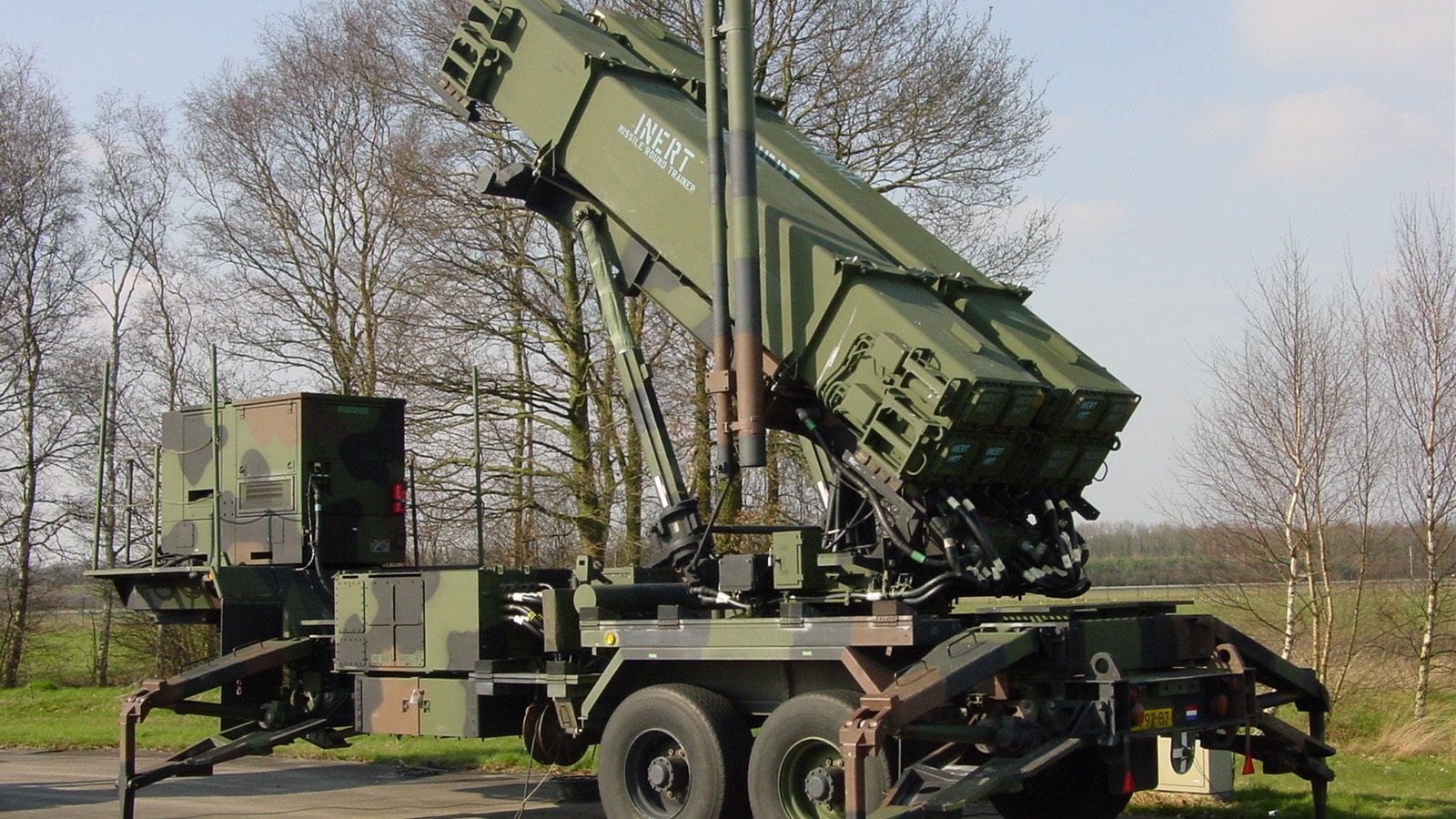
Boeing said on October 5 that Lockheed Martin has awarded it an undefinitized contract action worth approximately $14.7 billion to scale production and deliver seekers for the Patriot Advanced Capability-3 Missile Segment Enhancement (PAC-3 MSE) interceptor. The company said the award enables it to triple PAC-3 MSE seeker production in Huntsville, Alabama, under a seven-year framework agreement with the U.S. Department of War.
According to Boeing, its seekers allow the most advanced Patriot interceptors to identify, track and engage threats including hostile aircraft, hypersonic missiles, ballistic missiles and cruise missiles. Lockheed Martin is the prime contractor for the PAC-3 MSE interceptor, and the award came to Boeing from Lockheed rather than directly from the government.
The release did not give production quantities, a delivery schedule or the number of seekers Boeing builds today, so the planned tripling cannot be expressed in units from the company’s statements. Its headline describes the award as a seven-year contract.
From framework to contract
The award follows a framework that Boeing, the Department of War (DOW) and Lockheed Martin announced on April 1. In a Boeing feature published that day, the company said that “Boeing, the DOW and PAC-3 Missile Segment Enhancement (MSE) prime contractor Lockheed Martin will immediately begin production ramp-up and negotiate toward a multiyear contract award later this year.”
Boeing said in April that it had invested more than $200 million since 2024 to expand PAC-3 seeker production capacity in Huntsville, including a 35,000-square-foot facility expansion. The framework also allows for additional cash-neutral Boeing investments across the production value stream, the company said.
Bob Ciesla, vice president of Boeing Precision Engagement Systems, said at the time that the agreement “paves the way for us to scale rapidly to deliver increasingly sophisticated seekers.” He added that Boeing increased seeker deliveries by more than 30% in 2025.
Factory and supply chain changes
In the October release, Boeing said that in addition to recent capital investments to expand its PAC-3 seeker factory, it has strengthened supplier relationships “for a more agile, affordable, resilient and scalable supply chain.” It said it has also modernized facilities with new technology and improved processes and controls “to increase first-time quality.”
Production ramp-up and hiring began earlier in 2026, after the framework was announced, according to a companion Boeing feature published the same day. Boeing expects the work to support hundreds of direct and indirect jobs in the Huntsville area. It did not give a specific hiring target.
Steve Parker, president and CEO of Boeing Defense, Space & Security, said in the release:
“Early investment and a relentless focus on quality and execution have positioned us to now deliver seekers at unprecedented levels in the near-term, and we’re committed to building on that momentum.”
Boeing said the production increase supports the Department of War’s focus on strengthening what the department calls the Arsenal of Freedom, and aligns with its Acquisition Transformation Strategy to accelerate delivery of key capabilities to service members.
Why it matters
For defense manufacturers and their suppliers, the award shows a production framework moving to a funded contract within about six months. In April, Parker said the department’s Acquisition Transformation Strategy “empowers industry to invest and accelerate the delivery of complex systems at scale.” The April announcement did not give a contract value; the October award does.
Boeing’s own description of the work points to more than final assembly. It names supplier relationships, facility modernization and first-time quality as areas it has worked on alongside the factory expansion. The company has not named the suppliers involved or said how much of the contract value will flow to them.
What to watch
The award is undefinitized, and the October release did not say when final terms will be agreed. The April framework called for negotiations toward a multiyear contract award later in 2026. Boeing’s statements do not say whether further contract actions under the framework are expected, or when the Huntsville line is due to reach the tripled rate.
The caveats
All figures in this report come from Boeing’s announcements. The contract value is described as approximate, and the release did not include statements from Lockheed Martin or the Department of War. Boeing’s 30% delivery increase for 2025 was not accompanied by a unit count or a baseline.