Ofgem, the energy regulator for Great Britain, on October 21 launched Tender Round 14 of its offshore transmission owner (OFTO) regime, inviting investors to compete to own and operate the transmission link for the Hornsea 3 offshore wind farm. Ofgem puts the round’s estimated value at around £3.5 billion and expects it to be its largest tender round to date.
Under the OFTO regime, offshore transmission assets are built first and then sold by the wind farm developer to the winning bidder. For Hornsea 3, Ofgem said the prebuilt assets include cables and offshore and onshore substations. The regulator grants an offshore transmission license for the specific assets, and the new owner receives a long-term, inflation-linked revenue stream for financing, operating and maintaining them “for up to 25 years, subject to asset availability and performance.”
“Since its launch in 2009, the OFTO regime has seen winning bidders invest over £10 billion in links connecting 28 offshore wind farms,” Ofgem said. It expects more North Sea offshore transmission assets to come to market through the framework.
Where the tender stands
The round has opened at the Enhanced Pre-Qualification (EPQ) stage. According to Ofgem’s tender rounds page, the EPQ document “sets out the requirements bidders need to demonstrate in order to be invited to participate in the Invitation to Tender Stage.” Ofgem is encouraging companies or consortiums with transmission expertise to register on its OFTO tendering portal. The page lists no further milestone dates for the round.
Recent rounds show the level of interest. In March 2026, Ofgem shortlisted five bidders in Tender Round 13 for the links serving the East Anglia THREE, Inch Cape and Dogger Bank C wind farms, which it described as its biggest field of bidders since 2019. In August 2025, it shortlisted three bidders for the Sofia transmission link in Tender Round 12.
Beatrice Filkin, Ofgem’s director of major projects, said: “Hornsea 3 is one of the world’s biggest windfarms.” She added: “By running a competitive process, Ofgem is helping attract the investment Britain needs for a cleaner, more secure energy system while making sure consumers get value for money.”
The wind farm
Hornsea 3 is under construction more than 100 kilometers offshore in the North Sea and is due for completion by the end of 2027, according to Ofgem, which said it is “projected to be able to power 3.3 million UK homes.” The regulator’s release does not name the developer. The Hornsea 3 project website identifies Ørsted as the company developing, constructing and operating the wind farm, describes it as an £8.5 billion infrastructure project and says the power will connect to the National Grid at Swardeston, near Norwich in Norfolk.
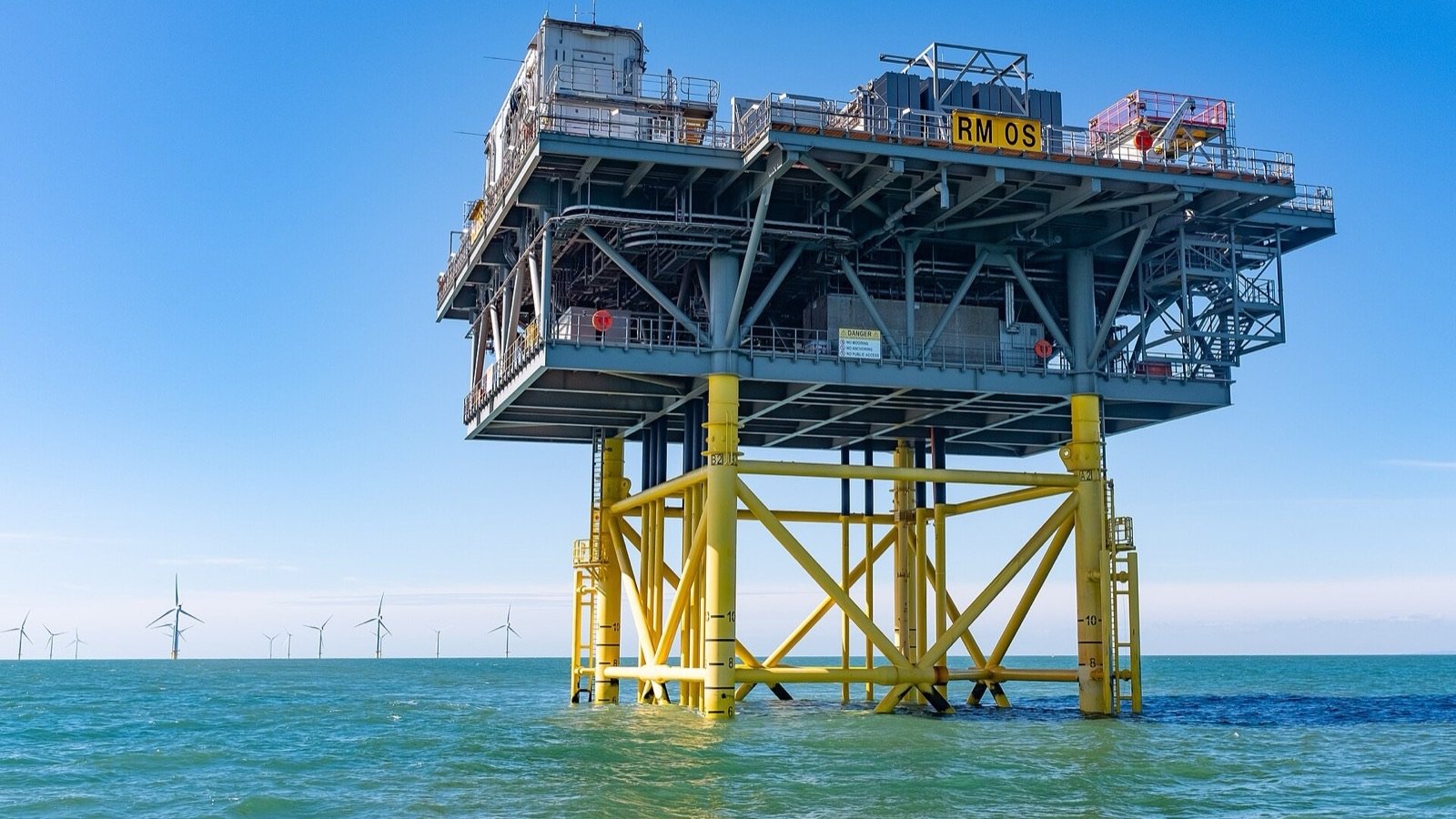
Ørsted has reported progress on major grid equipment in recent weeks. On September 22, it said the second of the project’s two offshore converter stations had been installed. The station’s jacket stands in 37 meters of water and is 60 meters tall, and the structure reaches 70 meters above sea level. Heerema Fabrication Group built the jackets at its yard in Vlissingen, the Netherlands, while the topsides were built in Map Ta Phut, Thailand, and sailed more than 13,000 nautical miles to Haugesund, Norway, for installation and commissioning of high-voltage equipment. Ørsted named Aibel and Hitachi Energy as suppliers and Heerema Marine Contractors as the transport and installation contractor. Luke Bridgman, managing director of Hornsea 3 at Ørsted, called the work “an incredible feat of engineering.”
On October 20, Ørsted said construction was complete on the Iceni battery energy storage system, a 300-megawatt (MW), 600-megawatt-hour (MWh) installation of 170 Megapack units beside the Hornsea 3 onshore converter station near Norwich. The battery shares a grid connection point with Hornsea 3, and the first stage of commissioning and testing is underway. Ørsted named Hitachi Energy, Knights Brown and Tesla as partners. Ofgem’s release describes the assets in the tender only in general terms and does not say which specific installations are included.
Why it matters
For infrastructure investors, the round offers a single, large regulated asset with revenue linked to inflation for up to 25 years, subject to availability and performance. Ofgem says competitive tendering pairs generators with efficient transmission owners and connects offshore wind “at least cost to consumers.”
The regulator also presents the regime as part of wider changes to Britain’s energy system, supporting demand from transport, heating, industry and data centers, and strengthening security by “reducing exposure to volatile global gas markets.” On scale, Ofgem’s Filkin calls Hornsea 3 one of the world’s biggest wind farms, and Ørsted’s project updates describe it as the world’s single-largest offshore wind farm.
What to watch
The next step is the outcome of pre-qualification, when Ofgem decides which bidders are invited to the Invitation to Tender stage. Separately, Ofgem opened consultations on October 14 on license changes for the existing Moray West and Dogger Bank A transmission owners. Hornsea 3 itself is due for completion by the end of 2027.