Boston Dynamics said on Oct. 6 that it has appointed Rohit Prasad, a former Amazon executive who helped build the Alexa voice assistant and led development of the Amazon Nova foundation models, as chief executive officer, effective Oct. 7. The robot maker said the hire is meant to speed up its Physical AI strategy, which pairs its mobile robots with advanced AI so they can be commercialized at scale.
According to the company’s announcement, Prasad spent 12 years at Amazon, most recently as senior vice president and head scientist for Alexa and Artificial General Intelligence. Boston Dynamics said he helped turn Alexa into a consumer AI service used in hundreds of millions of households and, more recently, led the Nova model family that enterprises use. Before Amazon, he spent nearly 14 years at Raytheon BBN Technologies, where he led machine-learning research and its applications for U.S. government and commercial customers.
Prasad is expected to join the company’s board of directors, subject to the relevant approval process, the release said. It noted that he has lived in the Boston area for more than 25 years and said his ties to the region’s robotics and AI community should help the company attract talent and deepen collaborations. The announcement did not name a predecessor or say who had been running the company before the appointment.
“Boston Dynamics is uniquely positioned to advance Physical AI through its world-class robotics expertise,” Prasad said in the release. Jaehoon Chang, vice chair of Hyundai Motor Group and chair of the Boston Dynamics board, pointed to the company’s robotics work, Prasad’s record of turning AI into products at global scale, and Hyundai Motor Group’s manufacturing, logistics and mobility capabilities as the foundation for the strategy.
Three robots, one still in development
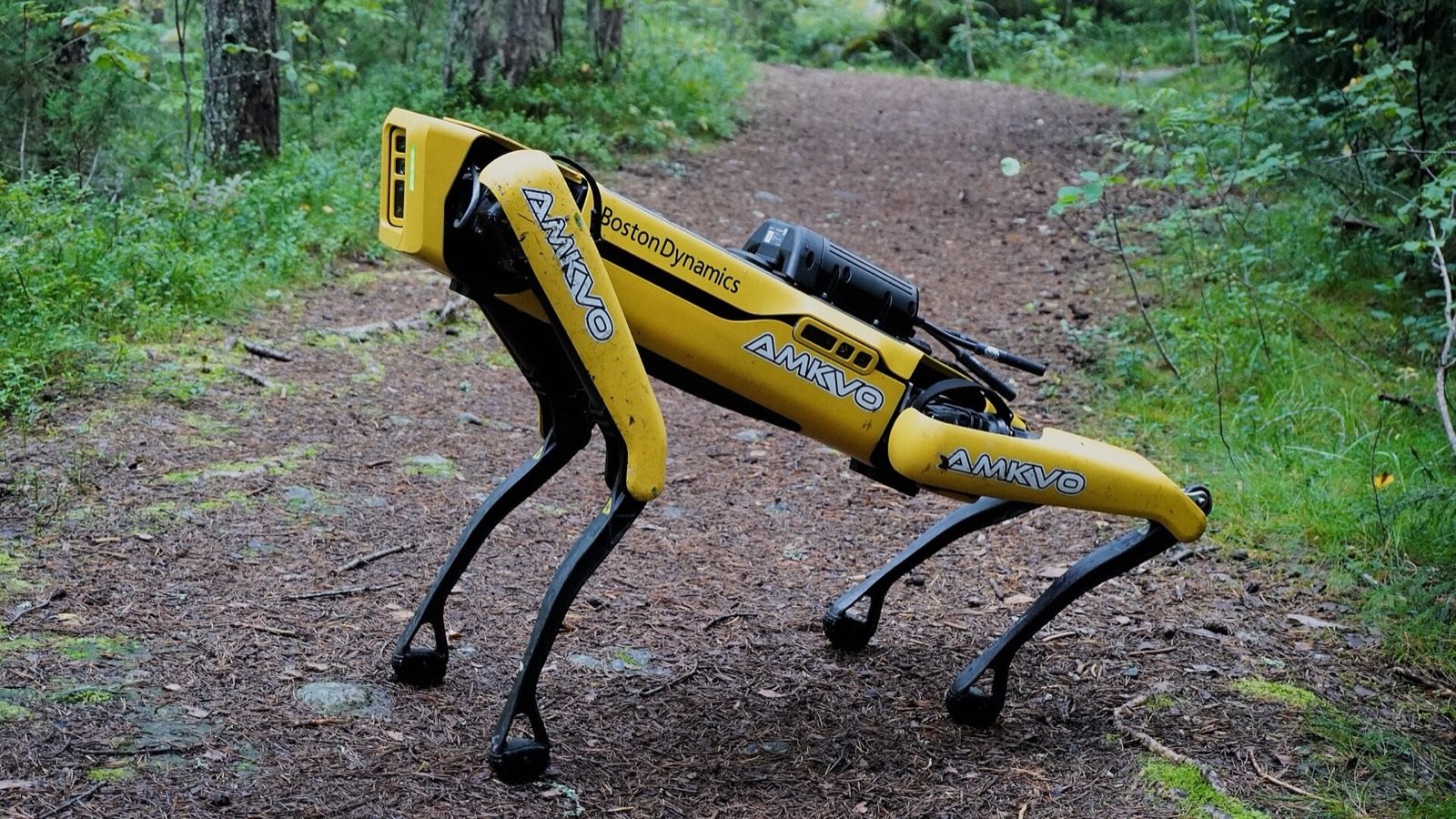
Boston Dynamics describes its portfolio as three machines: Spot, a four-legged robot used for inspection and safety work; Stretch, a box-moving robot for logistics and retail; and Atlas, an electric humanoid platform that the company says is still in development. The release said Prasad’s job is to turn these systems into products that improve safety, productivity and efficiency in industrial and commercial settings.
The appointment came about two weeks after the company opened the Robotics Metaplant Application Center (RMAC) at Hyundai Motor Group Metaplant America, on a campus outside Savannah, Georgia. In its Sept. 21 announcement, Boston Dynamics described the center as a testbed and training site for bringing Atlas into Hyundai Motor Group’s car production, starting with tasks such as organizing and sequencing auto parts for assembly. It said applications would extend to component assembly by 2030, with Atlas later taking on repetitive and strenuous work such as lifting heavy loads.
The September release also set out scale targets. It said Atlas deployment would begin with 25,000 units at Hyundai Motor and Kia plants worldwide over the next few years, and that Hyundai Motor Group would establish a new U.S. production facility capable of producing 30,000 robots a year. The release did not name a location for that plant. The RMAC itself is due to move next year into a new building at the Georgia site, expanding it to about 10 times its current size.
Why it matters
For manufacturers and logistics operators weighing mobile robots, the appointment shows where Boston Dynamics says its priorities now lie: AI that the company expects to bring new levels of autonomy, adaptability and productivity to its robots, alongside the hardware it is known for. Boston Dynamics framed Prasad’s experience in scaling consumer and enterprise AI products as the reason for the hire and said it expects him to accelerate the integration of AI and robotics.
The Atlas plans are large compared with how the company itself describes the robot today. Its own boilerplate lists the humanoid as in development, while the September announcement outlines deployments in the tens of thousands at Hyundai and Kia plants and a dedicated U.S. robot factory. Beyond the 2030 component-assembly target and the 2027 plans below, the company has not published a detailed rollout schedule.
What to watch
- Board approval of Prasad’s directorship, which the release said is subject to the relevant approval process.
- The RMAC’s move into a larger building at the Georgia Metaplant, planned for next year according to the September release.
- Moves beyond automotive. Boston Dynamics said it plans to explore other industries in 2027 and is in talks with existing Spot and Stretch customers in manufacturing, aerospace, semiconductors, logistics, food and beverage, and life sciences to scale data collection and continue Atlas training.
The caveats
Both announcements are company statements. Neither gives financial terms, current deployment figures for Spot or Stretch, or reasons for the leadership change. The Atlas volumes and the 30,000-unit production plant are stated plans, not completed deployments, and no independent source has confirmed the timelines.