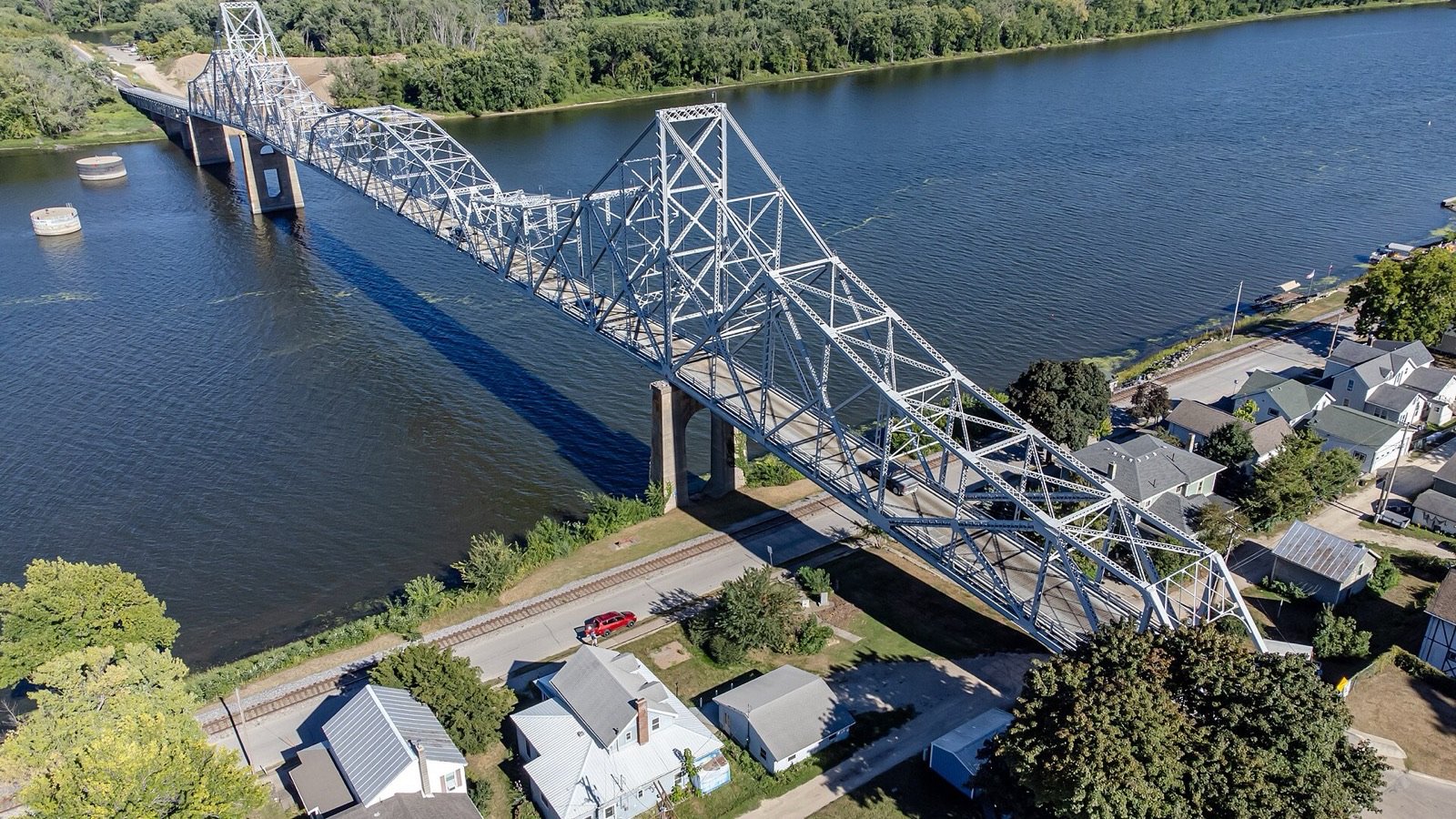
The new Iowa 9/WIS 82 Mississippi River Bridge at Lansing, Iowa, is scheduled to open to traffic on Friday, November 6, 2026, well ahead of the original spring 2027 target, the Wisconsin Department of Transportation (WisDOT) and the Iowa Department of Transportation (Iowa DOT) said on October 5. The $140 million steel truss replaces a crossing that first opened in 1931.
Iowa DOT said the bridge is expected to open on the afternoon of November 6, while WisDOT said a specific time would be announced in late October. The agencies had earlier announced an early November opening. Work on the replacement began in late 2023, and the prior bridge was closed permanently in late 2025 and demolished in December 2025, according to the releases.
Iowa DOT said project staff credited the early opening to the concentrated work of the contracting team, aided by favorable weather and river conditions. WisDOT said both agencies acknowledged the construction contractors and consultant partners for their work to expedite the opening. Neither release named the firms.
A wider, longer truss
The new crossing keeps the structural type of its predecessor: a steel through-truss. According to Iowa DOT’s design overview, the bridge is 1,724 feet long in total, compared with 1,702 feet for the old bridge, and its steel truss runs 1,352 feet against 1,152 feet previously. The maximum height above normal water level rises to 180 feet from 165 feet.
The roadway is nearly twice as wide. The deck measures 40 feet, up from 21 feet, with 12-foot driving lanes in place of 10-foot lanes and 8-foot shoulders where the old bridge had none. A reinforced concrete deck replaces the welded steel grate of the 1931 structure. The roadway now follows a continuous gradual curve rather than straight lines with sharp changes, and the steepest slope eases to 6% from 7%. The speed limit on the bridge stays at 25 mph.
For river traffic, the navigation channel widens to 750 feet from 650 feet. Channel clearance is listed at 60 to 64 feet, compared with 68 feet for the old bridge. The steel is protected by a duplex coating system that begins with thermal spray zinc metalizing, followed by epoxy and urethane layers; exterior surfaces get a UV-resistant urethane topcoat, and interior steel gets an extra epoxy layer. Iowa DOT said the system is meant to keep the bridge strong and visually appealing over a 100-year design life.
Cost and funding
Iowa DOT’s project schedule and costs page puts the total at $140 million. Federal funding will cover approximately 80% of the cost of the bridge, and Iowa and Wisconsin will split the remaining costs evenly. The agency’s project timeline shows the replacement went out for bids in August 2023, with initial work set to begin that September.
Ferry and detour
Since November 2025, the two departments have provided a free car ferry across the river through two operators. The ferry averaged about 555 vehicles a day in summer 2026 and will run through November 6, when it will be discontinued. Drivers who could not or chose not to use the ferry have followed a marked detour over the U.S. 18 bridge between Marquette, Iowa, and Prairie du Chien, Wisconsin, about 30 miles south, Iowa DOT said.
Nearly a century of service
Iowa DOT’s bridge history traces the old crossing to a 1931 opening as a toll bridge with an asphalt-covered wooden plank deck, after its design was changed from a suspension bridge to a cantilevered through truss in 1930. In March 1945, an ice dam damaged the slough bridges, and the private Iowa-Wisconsin Bridge Company could not repair them. After a closure during which the bridge was strengthened and re-decked, it reopened without a toll in 1957 under the ownership of the two states.
The Iowa and Wisconsin departments began assessing the crossing for improvements in 2003 and 2004, evaluated it for possible rehabilitation in 2019 and discussed replacement as the preferred option at a public meeting in June 2021, according to the timeline.
Why it matters
Since late 2025, drivers crossing at Lansing have relied on the ferry or a detour of about 30 miles. Opening the new bridge restores the Iowa 9/WIS 82 highway crossing months earlier than the original schedule, and the ferry service ends the same day.
The new design also changes the crossing for both road and river users. Shoulders, wider lanes and a concrete deck replace a narrow grate deck with no shoulders, and river traffic gets a navigation channel 100 feet wider than before, though with a lower listed clearance.
What to watch
Opening day does not end construction. WisDOT said work will continue through the winter outside the main traffic lanes, including restoring the ferry landing areas and removing the prior bridge’s piers and foundations. In spring 2027, additional work on the bridge deck will require traffic disruptions but should not require any full closures, and the full project is scheduled to be completed in late spring 2027.