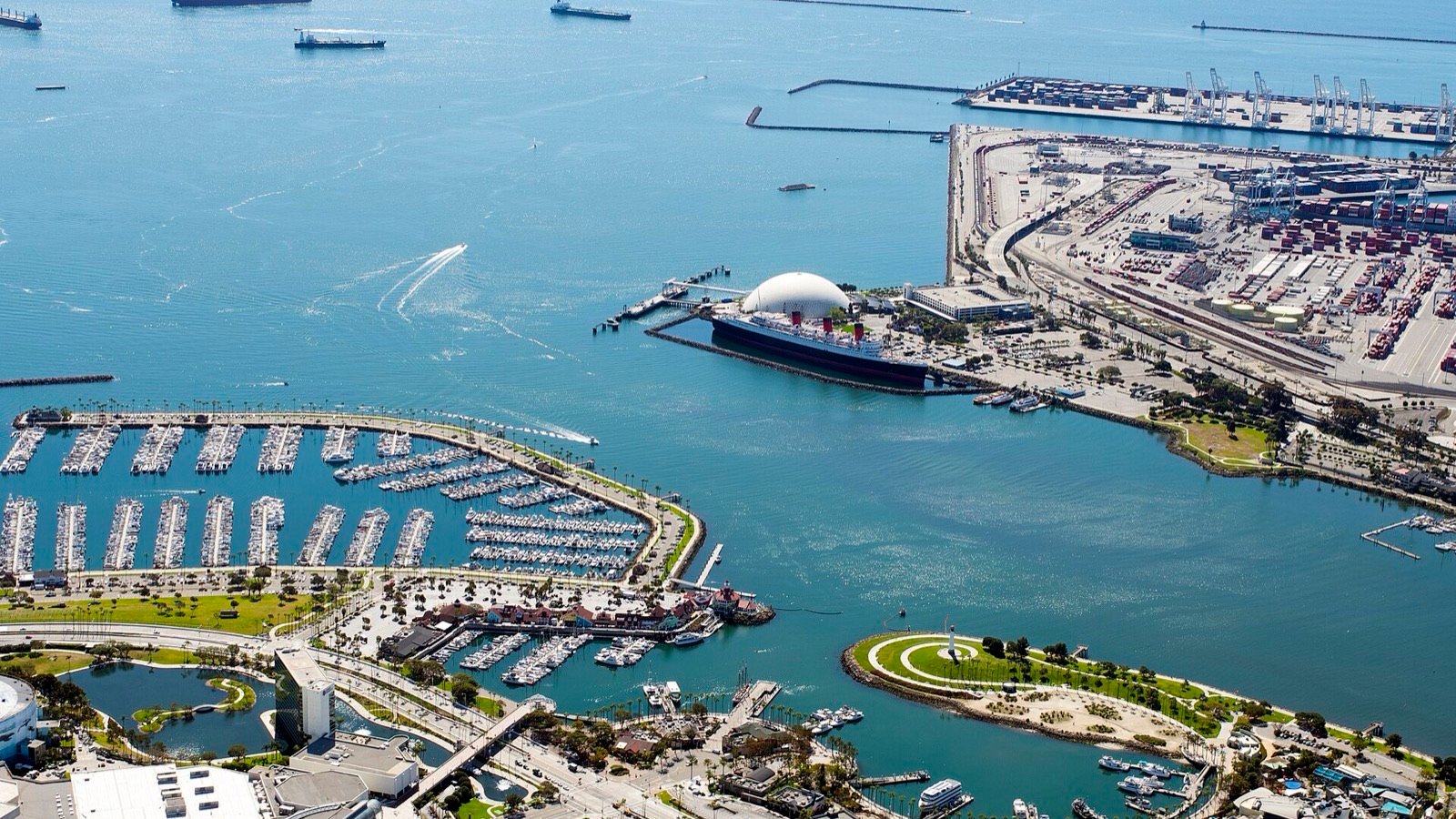
Both container ports in San Pedro Bay set all-time monthly records in September. The Port of Los Angeles handled 1,042,652 twenty-foot equivalent units (TEUs), the busiest month in its 118-year history, and the neighboring Port of Long Beach moved 997,177 TEUs, its busiest month on record, according to figures released by the two ports. Together they handled about 2.04 million TEUs.
Los Angeles: record month, quarter and four-month stretch
Los Angeles said its September total beat the previous monthly record, set in July 2025, by more than 20,000 TEUs. Loaded imports reached 545,696 TEUs, up 19% from September 2025, and loaded exports rose 10% to 125,751 TEUs. Empty containers totaled about 371,206 TEUs, the highest monthly figure in port history.
The port moved nearly 3 million TEUs from July through September, its busiest quarter, and nearly 4 million from June through September, its strongest four-month run. Volume for the first nine months of 2026 was nearly 8.1 million TEUs, more than 3% ahead of the same period last year.
Speaking at the port’s monthly media briefing, Executive Director Gene Seroka credited resilient consumer demand, inventory replenishment and a shift of cargo toward Los Angeles as shippers deal with challenges along the Suez and Panama Canal routes. He also said tariffs are lower than levels seen earlier this year, which he said gives importers more certainty on costs.
“Consumer demand remains resilient, importers are replenishing inventories and more cargo is being allocated to Los Angeles,” Seroka said. Willy Shih, a professor at Harvard Business School who joined the briefing, said: “Companies are moving from purely optimizing for cost to optimizing for options.”
Long Beach: imports up 31%
Long Beach’s September figure was 25% higher than a year earlier and topped the port’s previous record of 987,191 TEUs, set in October 2024, according to reports by FreightWaves and Container News on the port’s release. Loaded imports rose 31.3% to 509,390 TEUs, exports increased 7.8% to 91,747 TEUs and empty container moves rose 22.1% to 396,040 TEUs. Through September, the port handled 7,675,255 TEUs, up 3.9% from the same period of 2025.
Both outlets reported that port CEO Noel Hacegaba attributed the result to shippers relying on Long Beach as they adjust to high diesel costs, Panama Canal access restrictions and the prospect of a new U.S.-China trade agreement, and that the record was achieved without congestion. Container News reported that Total Terminals International set a port monthly rail record of 59,410 moves in September, close to half of that terminal’s container volume.
Long Beach is also preparing for road disruption. FreightWaves reported that Caltrans plans a 16-month deck replacement on the Vincent Thomas Bridge starting November 7, and that Long Beach container terminals will offer extra evening and Saturday gates for six weeks beginning in late October, excluding Thanksgiving week. Container News said the extended gate program is being run with marine terminal operators, the International Longshore and Warehouse Union (ILWU) and the Harbor Trucking Association.
The import picture
The September surge follows a weak start to the year for North American imports overall. The World Trade Organization (WTO) said in its October trade outlook that North American merchandise imports fell 10.6% year on year in the first quarter of 2026, mostly because of frontloading ahead of higher US tariffs in 2025, before recovering to 5.3% growth in the second quarter. The WTO said that suggests underlying import demand in North America is stronger than its 1.4% forecast for the year implies.
Ocean freight has also been expensive. The WTO, citing Freightos data, said Asia–North America spot rates stood at around $6,200 to $8,000 per forty-foot equivalent unit (FEU) at the end of June, and that trans-Pacific rates remained high in September.
Why it matters
For importers, the San Pedro Bay figures show the two Southern California ports absorbing record volume in the same month, with Long Beach reporting no congestion. Both port leaders described cargo shifting toward their ports, citing canal route problems and diesel costs alongside steady consumer demand and restocking.
The empty container counts show how unbalanced the flows remain. In Los Angeles, about 371,206 TEUs of empties compared with 125,751 TEUs of loaded exports in September; in Long Beach, 396,040 TEUs of empty moves compared with 91,747 TEUs of exports.
What to watch
Seroka said the port’s focus is to “finish the year strong.” In Long Beach, Container News reported that the extended gate hours are intended to help maintain cargo flow during the Vincent Thomas Bridge project, which starts November 7. The ports’ October figures will show whether the September pace continued.
The caveats
The Long Beach figures in this report are as published by FreightWaves and Container News from the port’s release; neither outlet quoted port officials directly. Neither port gave a forecast for the full year in the materials cited here.