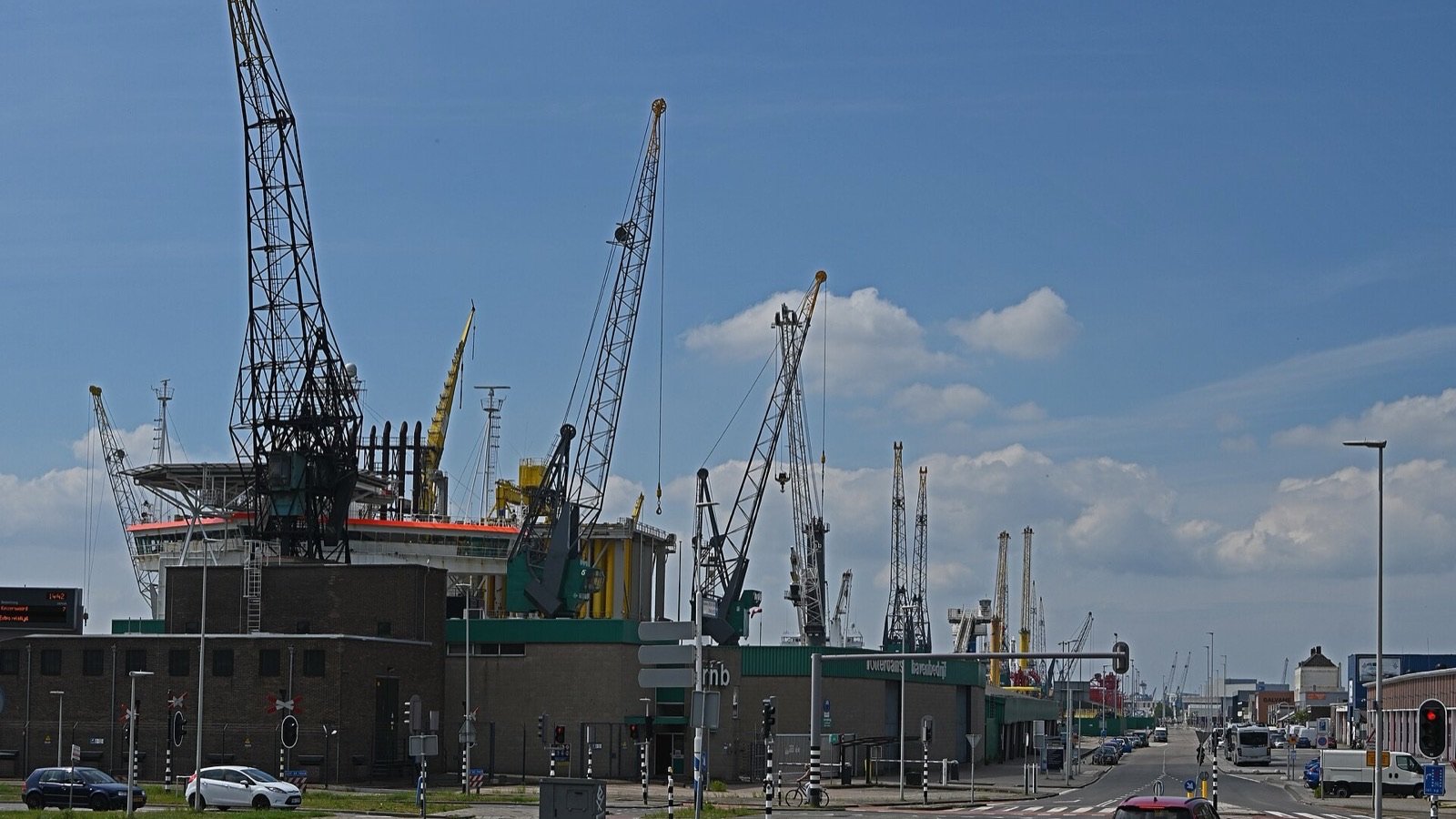
The port of Rotterdam handled 323.2 million tonnes of cargo in the first nine months of 2026, up 0.9% from a year earlier, the Port of Rotterdam Authority said on October 16. Gains in coal, crude oil and oil products offset declines in iron ore, agribulk, liquefied natural gas (LNG) and container tonnage, as the closure of the Strait of Hormuz changed how European refiners source oil.
The authority said growth came mainly from coal, other dry bulk, crude oil and oil products. Iron ore and scrap, agribulk, LNG, other liquid bulk, containers measured by weight and breakbulk all fell.
Liquid bulk: refiners buy more crude
Liquid bulk rose 3.1%. Crude oil throughput increased 2.1%, which the authority attributed to the loss of oil product imports from the Middle East after the closure of the Strait of Hormuz; European refineries responded by importing and processing more crude. Oil products rose 11.1%, with exports up 31.9% and imports down 6.9%.
LNG slipped 0.2%. Other liquid bulk fell 3.8%: biofuel imports increased, but not enough to offset weaker chemical product flows, which the authority linked to weak chemical production in the Netherlands, Belgium and Germany.
Dry bulk: coal up, iron ore down
Dry bulk rose 2.1%. Coal jumped 15.3%, driven by a recovery in coking coal for European steelmaking and by higher demand for thermal coal, which the authority tied to high gas prices resulting from geopolitical tensions in the Middle East. Iron ore and scrap fell 5.9%; low river water levels raised transport costs and limited supply, so steelmakers drew on existing stocks. Agribulk fell 11.4% after stockpiling in 2025 reduced import demand, while other dry bulk rose 15% on construction raw materials.
Containers: hinterland up, transhipment down 20%
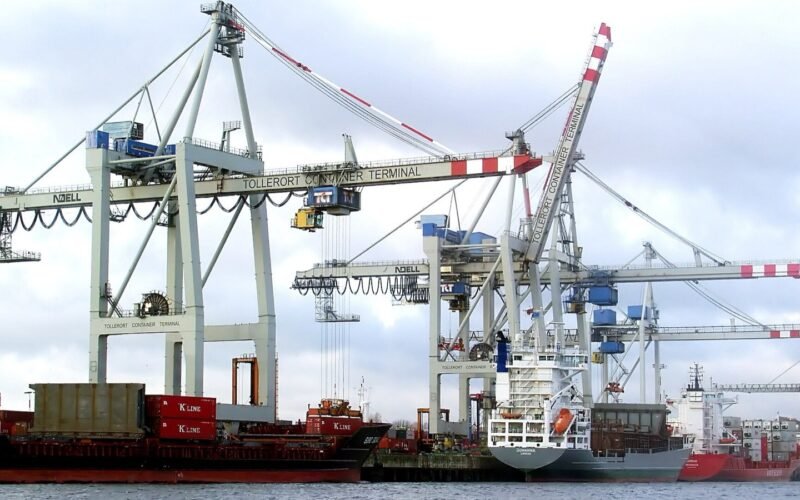
Container volume measured in twenty-foot equivalent units (TEUs) was essentially flat, up 0.1%, while container tonnage fell 2.2%. Underneath that, the flows moved in opposite directions. Hinterland volume, cargo moving to and from inland Europe, rose 7.2%, including an 8.9% increase in full container imports and 1% growth in full container exports. Empty container movements also continued to rise.
Transhipment, cargo transferred between vessels at Rotterdam, fell 20%. The authority attributed the decline to long-standing capacity constraints at the port’s deep-sea terminals, which are pushing that cargo to other ports. In its container commentary for the first quarter, published in April, the authority said throughput volumes are expected to recover only once container terminal expansions have been completed.
Breakbulk fell 1.4%. Roll-on/roll-off (RoRo) traffic rose 0.7% despite weak economic performance in the United Kingdom, while other breakbulk fell 10.2%, reflecting prolonged stagnation in European manufacturing, particularly machinery and automotive.
“The throughput figures show that the port of Rotterdam is continually adapting itself to changing circumstances,” said Boudewijn Siemons, CEO of the Port of Rotterdam Authority. “Reliable infrastructure is the basis for economic growth and a resilient supply chain.”
From a dip to modest growth
The nine-month result follows a weaker start. In its first-quarter update on April 22, the authority reported throughput of 103.0 million tonnes, down 0.7% from 103.7 million tonnes a year earlier. At the time it said “The closure of the Strait of Hormuz has severely disrupted the global energy system,” but that the impact was barely visible in first-quarter figures. It said Persian Gulf countries accounted for 19 million tonnes, or 4.4%, of the port’s annual throughput, and that Rotterdam depended on Persian Gulf countries for 10% of its crude oil throughput and 14% of its oil product throughput. Direct container traffic to and from the Middle East accounted for 1.2% of total volume.
Rotterdam’s flat container count is in line with the wider region. The World Trade Organization’s October trade outlook, using a container throughput index compiled by the RWI – Leibniz Institute for Economic Research and the Institute of Shipping Economics and Logistics (ISL), said the North Range index of northern European ports, which includes Rotterdam, was flat between February and July 2026, while global container throughput fell 2.5% over the same period.
Why it matters
For shippers and forwarders, the split inside the container figures is the main signal. Inland flows to and from European customers are growing, but Rotterdam is losing transhipment cargo because of terminal capacity limits, according to the authority. Siemons said continued investment in road, waterway and rail networks is important, and the authority has said terminal expansions are needed before container throughput can recover.
The energy figures show how the Hormuz disruption is working its way through Europe’s refining system. With fewer oil products arriving from the Middle East, more crude is being refined in Europe and more oil products are being exported from Rotterdam. The WTO report notes that European natural gas prices recently rose above $21 per million British thermal units (MMBtu), their highest since 2022.
What to watch
The October release gives no forecast for the fourth quarter or the full year, and no timeline for new terminal capacity. Full-year figures will show whether the gains in coal and oil products hold and whether the transhipment decline continues.